There was the odd cassette recording and later there were MiniDiscs of my sporadically made and very rarely recorded stuff in the 90s and 00s. There were recordings that felt, at the time, like the most important things I had ever made. But as with so much physical media, none of it survived too far into the 2000s.
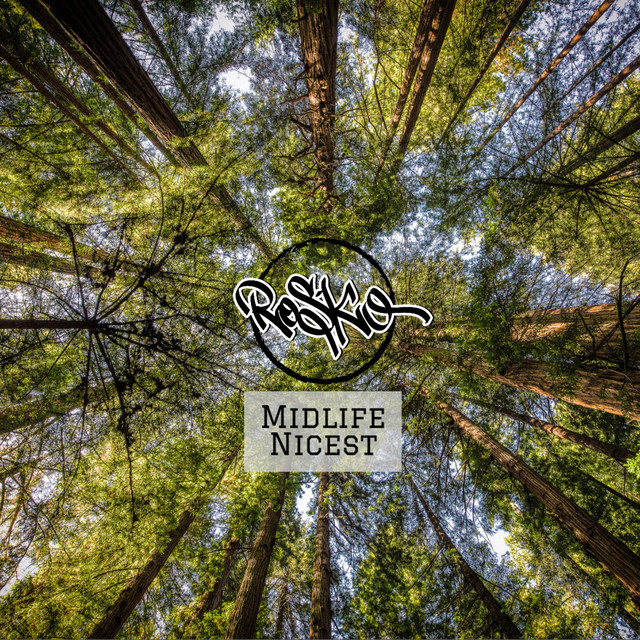
That is the honest starting point for Midlife Nicest, the UK hip hop album I made when I turned 40. I wanted something to show for all those years of jumping on the mic at any given opportunity.
Jumping on the mic at any given opportunity
I spent my teens and twenties as an active emcee: endlessly writing lyrics in notebooks and on scrap paper, and carrying a dictaphone so I could get ideas down the moment they entered my head. I remember carrying a rhyming dictionary in my backpack like it was some kind of essential item.
But my involvement in music back then was never about recordings. I'd show off my bars at any given opportunity alongside DJs at parties in Kent where I grew up, and later with a band who showed some semblance of determination to get somewhere: we performed at clubs and unis in London and used to get actual, real life recordings in the can.
When I moved to Brighton we'd throw big hip hop nights and had a residency at clubs where I'd still jump up and do my thing. I remember one night where we had booked UK hip hop legends Blak Twang to perform at one of our nights. I did my thing as the warm up, introduced them, and left early. Went home and decided that was that.
And then, for a long time, making music was done
Over the years tapes went missing, MiniDiscs stopped being readable by anything I still owned and eventually went AWOL, and for a long time making music was done.
Then forty arrived, and with it an itch I could not scratch. I wanted something tangible: a legacy of my love for, and involvement in, hip hop. So I made an album.
I called it Midlife Nicest essentially to take the piss out of myself before anyone else might, but the pun meant something. The stuff I was making was by far the best (and definitively last) stuff I'd make.
I locked in (something impossible when you're 21!) and went all in on a UK boom bap album that might appeal to people like me: adult contemporary hip hop for old heads. I got some shit off my chest that felt important, had a heavy dose of cathartic creativity, and it's picked up some niche traction with tens of thousands of plays since release. Check it out.
Why boom bap still hits hardest
If you grew up on hip hop in the nineties, boom bap is the sound of home. The name comes from the drums themselves: that kick and snare pattern that goes boom, bap, boom boom bap. Dusty, swung, sampled, and imperfect on purpose.
Boom bap hip hop is built on breakbeats lifted from funk, soul and jazz records, chopped on an MPC or SP-1200 and looped until the groove settles into your spine. Tempos usually sit somewhere between 85 and 95 BPM. Crucially, there is space between the drums for a voice, which is exactly why emcees love it: no wall of synth, just a beat with a pocket to sit in.
Golden era boom bap of the late eighties and early nineties mapped out the template, and three decades on, producers all over the world are still building on it. It has never sounded more alive.
I wanted Midlife Nicest to feel like that. Warm, unhurried, human. Drums that sound like they came off vinyl, basslines with actual melody in them, and nothing over-stuffed.
What UK hip hop does differently
There is a reason British hip hop does not sound like an American record with a different accent pasted over the top.
The accent changes the rhythm. British English lands differently on a bar: our vowels are flatter in places, our consonants harder, and the phrasing naturally falls into a different cadence. When you write for your own voice instead of imitating someone else's, the delivery sits deeper in the pocket.
Then there are the reference points. My bars are full of things that only make sense here, and that is not a limitation, it is the appeal. UK hip hop has its own humour, its own slang, its own self-deprecation, and its own sense of what is worth saying out loud.
Adult contemporary hip hop: rap for grown-ups
Somewhere along the way hip hop became a genre for everybody, and that includes people with mortgages, kids and a bad back.
Adult contemporary hip hop is not a soft option. It is hip hop written from where you actually are at 40: reflection, family, work, the passing of time, and what you want to leave behind. The craft is the same. The punchlines still have to land. The subject matter has simply grown up, and so has the audience.
Midlife Nicest sits right in that space. It is hip hop you can play in the car with the kids in the back and still nod your head to alone on headphones.
Two tracks that came back to life
Midlife Nicest is out now, and two of its tracks, I Will and Rewild, later got a second life. I took them into a completely different world and rebuilt them as drum and bass versions for my new album, Gen Jungle. Same words, same sentiments, double the tempo.
Listen to Midlife Nicest
The whole album is streaming now. Press play and have a listen:
Listen to Midlife Nicest on Spotify
What comes next
Hip hop is where I started and it is not going anywhere. If Midlife Nicest is the hip hop chapter, Gen Jungle is the drum and bass one, and there is plenty more in the notebook.
And if you know my voice from commercials, video games or eLearning courses, this is the other side of it: same voice, same room, no script.